
pedestrians using guide dogs or white canes must
Pedestrian Rights: Guide Dogs and White Canes ⎯ A Comprehensive Guide (Updated 12/09/2025)
Pedestrians utilizing guide dogs or white canes must be afforded the right-of-way by all drivers, ensuring their safety during street crossings and navigation.
Recent lawsuits, like those filed by the D.C. Council of the Blind, highlight the critical need for accessible pedestrian signals and driver awareness.
Instances near Union Station demonstrate the challenges faced when visually impaired individuals struggle to interpret traffic patterns without adequate support systems;
Drivers failing to yield to these pedestrians face potential legal consequences, emphasizing the importance of respecting and upholding their fundamental rights.
Campaigns launched by departments like the General Department of Traffic and Criminal Investigation Department aim to educate drivers on pedestrian rights.
I. Understanding the Vulnerability of Pedestrians with Visual Impairments
Pedestrians with visual impairments, whether utilizing guide dogs or white canes, inherently face heightened vulnerability in navigating public spaces. Their reliance on non-visual cues – auditory signals, tactile paving, and the trusted guidance of their canine companions – makes them particularly susceptible to dangers posed by inattentive or unaware drivers.
The inability to readily perceive traffic flow, signal changes, or approaching vehicles creates a significant safety risk, especially at busy intersections like those near Union Station, where interpreting complex traffic patterns is challenging.
These individuals often depend on the courtesy and legal obligation of others to yield the right-of-way, yet alarming statistics reveal a high incidence of near misses, demonstrating a systemic failure to prioritize their safety.
Understanding this vulnerability is paramount for fostering a more inclusive and secure pedestrian environment, demanding increased driver awareness and accessible infrastructure.
II. Legal Framework Protecting Pedestrians with Guide Dogs or White Canes
Pedestrians utilizing guide dogs or white canes must be protected under a robust legal framework designed to ensure their safe mobility. Laws universally mandate drivers yield the right-of-way, recognizing the inherent vulnerability of these individuals. This protection extends beyond simple yielding, encompassing access rights and non-discrimination.
Recent legal challenges, such as the lawsuit filed by the D.C. Council of the Blind, underscore the ongoing fight for fully accessible pedestrian infrastructure, specifically accessible pedestrian signals. These signals are crucial for independent navigation.
Furthermore, legislation safeguards the public access rights of guide dog teams, preventing discriminatory practices. Failure to comply with these laws can result in significant legal consequences for drivers and entities failing to provide reasonable accommodations.
This legal foundation aims to create a pedestrian environment where visually impaired individuals can navigate with dignity and security.
III. Right-of-Way Laws: A Driver’s Responsibility
Pedestrians utilizing guide dogs or white canes must be granted absolute right-of-way by all drivers, a responsibility enshrined in law and reinforced by safety campaigns. Drivers are legally obligated to yield, stopping when necessary, to allow safe passage at crosswalks and intersections. This isn’t merely a courtesy; it’s a legal imperative.
The alarming rate of near misses – with one in two visually impaired pedestrians experiencing such incidents – highlights the critical need for driver compliance. Ignoring this responsibility carries significant consequences, including fines and potential legal action, as demonstrated by ongoing lawsuits.
Drivers must exercise heightened awareness, particularly in areas like Union Station, where complex traffic patterns can pose increased risks. Proactive yielding is paramount to preventing accidents and ensuring pedestrian safety.
Ultimately, respecting the right-of-way is a fundamental aspect of responsible driving.
A. Yielding to Pedestrians Utilizing Mobility Aids
Pedestrians using guide dogs or white canes must be yielded to immediately, representing a core tenet of pedestrian right-of-way laws. Drivers are required to come to a complete stop when a pedestrian signals intent to cross, or is actively crossing, at any marked or unmarked crosswalk. This applies regardless of traffic signal indications.
Yielding isn’t simply stopping; it’s ensuring the pedestrian has safely completed their crossing before proceeding. Awareness is crucial, especially given the challenges visually impaired individuals face navigating busy intersections like those near Union Station.
Drivers should anticipate potential difficulties in detecting these pedestrians and exercise extra caution. The legal framework underscores this obligation, with potential penalties for non-compliance.

Prioritizing the safety of pedestrians with mobility aids is a fundamental aspect of responsible driving and legal adherence.
B. Consequences of Failing to Yield
Pedestrians using guide dogs or white canes must be afforded the highest level of protection, and failing to yield carries significant consequences. Drivers who disregard this right-of-way face potential traffic citations, fines, and points assessed against their driving record.
More critically, failing to yield can result in severe injuries or even fatalities to the pedestrian. Legal repercussions extend beyond traffic violations, potentially leading to civil lawsuits for damages and negligence.
Recent legal battles, such as the suit against D.C. for inadequate pedestrian signals, underscore the seriousness with which these violations are viewed. Near-miss incidents are alarmingly common, highlighting the real-world risks.
Drivers must understand that prioritizing pedestrian safety isn’t merely a legal obligation, but a moral one, preventing potentially devastating outcomes.
IV. The Role of Guide Dogs in Pedestrian Navigation
Pedestrians using guide dogs or white canes must rely on these mobility aids for safe and independent travel. Guide dogs play a crucial role in navigating complex pedestrian environments, acting as a vigilant partner to their handler. These highly trained animals are capable of identifying safe crossing points, avoiding obstacles, and alerting to potential hazards.
Their training encompasses recognizing curbs, stairs, and changes in elevation, providing a level of awareness that significantly enhances pedestrian safety. Instances like Michael Osborn’s experience demonstrate the vital partnership between handler and dog.
However, even with a guide dog, pedestrians remain vulnerable, necessitating driver awareness and adherence to right-of-way laws. Public access rights ensure guide dog teams can navigate most spaces.
A. Guide Dog Training and Capabilities
Pedestrians using guide dogs or white canes must understand the extensive training these animals undergo. Guide dog training is a rigorous process, focusing on intelligent disobedience – the dog’s ability to refuse a command if it leads to danger. They learn to navigate obstacles, identify safe crossing points, and respond to changes in terrain.
Capabilities extend to discerning curbs, stairs, and potential hazards like overhanging branches or moving vehicles. This training empowers handlers with increased independence and confidence in pedestrian environments. The dogs are taught to guide around obstructions and stop before street edges.
However, even highly trained dogs require a safe environment, emphasizing the driver’s responsibility to yield and respect the team’s right-of-way, as highlighted by recent safety concerns.
B. Public Access Rights for Guide Dog Teams
Pedestrians using guide dogs or white canes must be aware of their legally protected public access rights. Guide dog teams have the right to access virtually all public spaces, including businesses, transportation, and government buildings, free from discrimination. This right is crucial for independent living and full participation in society.

Denying access to a guide dog team is illegal and can result in legal repercussions. Drivers must be mindful of this when encountering teams at intersections or crosswalks, ensuring safe passage. These rights are fundamental to the handler’s mobility and safety.
Recent legal battles, such as the D.C. lawsuit, underscore the importance of upholding these rights and creating accessible environments for all pedestrians, including those relying on guide dogs.
V. The Significance of the White Cane as a Mobility Device
Pedestrians using guide dogs or white canes must understand the white cane’s vital role as a symbol of independence and a tool for safe navigation. The white cane isn’t merely an aid; it’s a legal indicator of a pedestrian’s visual impairment, demanding respect and yielding from others. Drivers are legally obligated to yield the right-of-way to individuals using a white cane.
White cane laws and regulations exist to protect these pedestrians, ensuring they can traverse public spaces with dignity and security. Recognizing and respecting the white cane symbol is paramount for fostering an inclusive environment.
Challenges faced by blind pedestrians, highlighted in cases like those near Union Station, emphasize the need for heightened awareness and adherence to these laws, promoting safer street crossings for all.
A; White Cane Laws and Regulations

Pedestrians utilizing white canes must be aware of the legal protections afforded to them. White cane laws universally mandate drivers yield the right-of-way, recognizing the cane as a clear indicator of visual impairment. These regulations aren’t merely suggestions; they are legally binding requirements designed to ensure pedestrian safety.
Failure to comply with these laws can result in significant consequences for drivers, underscoring the seriousness of respecting the rights of visually impaired individuals. Current legal battles, such as the D.C. lawsuit, demonstrate ongoing efforts to enforce and strengthen these protections.
Understanding these laws is crucial for both pedestrians and drivers, fostering a safer and more inclusive environment for all members of the community, particularly those navigating urban spaces with a white cane.
B. Recognizing and Respecting the White Cane Symbol
Pedestrians using white canes must be instantly recognized and respected by all. The white cane isn’t simply a mobility aid; it’s a universally understood symbol signifying visual impairment and a need for heightened awareness from others. Drivers encountering a pedestrian with a white cane are legally obligated to yield the right-of-way, prioritizing their safety.
Respecting this symbol means more than just legal compliance; it requires proactive consideration and a willingness to adjust driving behavior. Near-miss incidents reported highlight the alarming frequency of drivers failing to acknowledge the cane, putting pedestrians at risk.
Public education campaigns are vital in reinforcing the significance of the white cane, fostering a culture of empathy and ensuring the safe navigation of visually impaired individuals within our communities.
VI. Accessibility Challenges Faced by Blind Pedestrians
Pedestrians using guide dogs or white canes must navigate a landscape riddled with accessibility challenges. Inadequate pedestrian signals, particularly in cities like D.C., pose significant risks, forcing individuals to rely on uncertain methods to assess traffic flow. Obstructions on sidewalks and crosswalks – from construction to carelessly parked vehicles – create hazardous barriers, disrupting safe passage.
These challenges are amplified at busy intersections, as exemplified by the difficulties faced near Union Station, where interpreting complex traffic patterns without visual cues is incredibly difficult. The increasing complexity of urban environments demands proactive solutions.
Addressing these issues requires a commitment to inclusive urban planning and a heightened awareness of the unique needs of blind pedestrians.
A. Inadequate Pedestrian Signals
Pedestrians using guide dogs or white canes must contend with the pervasive issue of inadequate pedestrian signals, a core accessibility barrier. The recent lawsuit filed by the D.C. Council of the Blind underscores this problem, highlighting the District’s failure to install and maintain accessible signals at most intersections. Traditional signals offer no tactile or auditory cues, leaving visually impaired individuals unable to independently determine safe crossing times.
This deficiency forces reliance on uncertain methods – gauging traffic flow by sound or attempting to assess pedestrian movement – creating dangerous situations. The lack of accessible pedestrian signals directly contributes to near misses and increased risk of accidents.
Effective solutions include Accessible Pedestrian Signals (APS) that provide audible and vibrotactile information.
B. Obstructions on Sidewalks and Crosswalks
Pedestrians using guide dogs or white canes must navigate a landscape frequently marred by obstructions on sidewalks and within crosswalks, significantly hindering safe passage. These obstacles range from overgrown vegetation and improperly parked vehicles to construction debris and street furniture placed without consideration for pedestrian accessibility.
Such impediments force individuals to detour into roadways, increasing their vulnerability to traffic. Claire Stanley’s experience near Union Station exemplifies this challenge, requiring her to navigate around pedestrian flow due to unclear pathways.
Consistent enforcement of clearway regulations, coupled with proactive maintenance and thoughtful urban planning, are crucial to ensuring unobstructed routes for all pedestrians, particularly those with visual impairments.
VII. Current Legal Battles for Pedestrian Accessibility
Pedestrians using guide dogs or white canes must increasingly rely on legal action to secure fundamental accessibility rights, as demonstrated by ongoing lawsuits challenging inadequate infrastructure. The D.C. Council of the Blind, alongside five plaintiffs, is currently suing the District for failing to provide accessible pedestrian signals at most intersections.
This federal suit underscores a systemic issue: the lack of auditory or vibrotactile signals necessary for safe street crossings by visually impaired individuals. These legal battles highlight the critical need for municipalities to comply with accessibility standards and prioritize the safety of all citizens.
Such advocacy efforts aim to compel governments to invest in inclusive infrastructure and ensure equal access to public spaces for pedestrians with disabilities.
A. Lawsuits Regarding Accessible Pedestrian Signals (D.C. Example)
Pedestrians utilizing guide dogs or white canes must navigate a landscape where accessible pedestrian signals are often absent, leading to increased risk and necessitating legal intervention, as exemplified by the lawsuit in Washington, D.C. Five blind individuals and the D.C. Council of the Blind are actively suing the District government.

The core claim centers on the District’s failure to install and maintain accessible pedestrian signals at the majority of its intersections; This deficiency creates significant barriers for blind pedestrians attempting to cross streets safely and independently. The lawsuit argues this constitutes a violation of accessibility rights.
Plaintiffs, like Claire Stanley and Qudsiya Naqui, face daily challenges due to the lack of appropriate signals, highlighting the urgent need for systemic change and improved infrastructure.
B. Advocacy Efforts by Organizations like the D.C. Council of the Blind
Pedestrians utilizing guide dogs or white canes must benefit from robust advocacy efforts, spearheaded by organizations like the D.C. Council of the Blind, to ensure their rights are recognized and protected. The Council isn’t merely filing lawsuits; they are actively working to raise awareness and demand systemic improvements in pedestrian accessibility.
Their legal action regarding accessible pedestrian signals is a prime example, directly challenging the District’s shortcomings and pushing for concrete changes. Beyond litigation, the Council engages in public education, lobbying, and direct advocacy with government officials.
These efforts aim to create a more inclusive environment where blind pedestrians can navigate public spaces with dignity and safety, free from unnecessary risks and barriers. Their work is vital for driving positive change.
VIII. Real-Life Scenarios and Near Misses

Pedestrians utilizing guide dogs or white canes must frequently contend with harrowing real-life scenarios and alarming near misses, highlighting the urgent need for increased driver awareness and pedestrian safety measures. Instances near Union Station exemplify the difficulties faced when navigating complex intersections without clear auditory or tactile cues.
Individuals like Claire Stanley experience the anxiety of waiting to discern traffic flow, while others, accompanied by their guide dogs, face perilous situations during street crossings. These aren’t isolated incidents; statistics reveal that one in two visually impaired pedestrians has experienced a near miss.

These encounters underscore the vulnerability of blind pedestrians and the critical importance of drivers yielding the right-of-way, demonstrating the real-world consequences of inattention or disregard.
A. Challenges at Busy Intersections (Union Station Example)
Pedestrians utilizing guide dogs or white canes must navigate uniquely complex challenges at bustling intersections like Union Station, where chaotic traffic patterns and a lack of accessible signals create significant hazards. Claire Stanley’s experience exemplifies this, often requiring her to stand at the curb, attempting to decipher the flow of pedestrians and vehicles solely through tactile sensation.
The sheer volume of foot traffic, combined with the absence of clear auditory cues, makes it incredibly difficult to assess safe crossing opportunities. This reliance on feeling the surrounding environment is inherently risky and time-consuming.
Such scenarios underscore the urgent need for improved accessibility features, including accessible pedestrian signals and enhanced driver education, to ensure the safety of visually impaired individuals at high-traffic locations.
B. Risks Faced During Street Crossings
Pedestrians utilizing guide dogs or white canes must confront substantial risks during routine street crossings, as evidenced by the alarming rate of near misses reported – one in two visually impaired pedestrians experiencing such incidents. Michael Osborn’s encounter with a potentially dangerous situation while crossing with his guide dog, Hastings, vividly illustrates these vulnerabilities.
Drivers frequently fail to yield the right-of-way, demonstrating a lack of awareness or disregard for the legal protections afforded to these pedestrians. This negligence can lead to harrowing experiences and potentially life-threatening consequences.
The absence of accessible pedestrian signals and the prevalence of obstructed crosswalks further exacerbate these dangers, demanding immediate attention and proactive solutions to enhance pedestrian safety.
IX. Pedestrian Safety Campaigns and Awareness Initiatives
Pedestrians utilizing guide dogs or white canes must benefit from robust public awareness campaigns designed to educate drivers about their rights and the importance of yielding. The General Department of Traffic and Criminal Investigation Department recently launched such an initiative, aiming to spread awareness regarding pedestrian rights and reduce incidents.
These campaigns are crucial for fostering a culture of respect and understanding, emphasizing that failing to yield isn’t merely a traffic violation but a potential threat to a vulnerable individual’s safety.
Effective public education must highlight the legal framework protecting these pedestrians and the consequences drivers face for non-compliance, ultimately contributing to safer streets for all.
A. Government-Led Campaigns (Traffic and Criminal Investigation Department Example)
Pedestrians utilizing guide dogs or white canes must be the central focus of government-led safety campaigns, like the one recently launched by the General Department of Traffic and Criminal Investigation Department. These initiatives are vital for disseminating information regarding pedestrian rights and driver responsibilities.
Such campaigns should employ diverse methods – public service announcements, educational materials distributed at driver’s education courses, and community outreach programs – to maximize reach and impact. Statistics demonstrating the increased risk faced by visually impaired pedestrians should be prominently featured.
The goal is to instill a proactive understanding among drivers, emphasizing that yielding isn’t simply a legal obligation, but a moral imperative to protect vulnerable road users.
B. Public Education on Pedestrian Rights
Pedestrians utilizing guide dogs or white canes must be recognized as possessing unequivocal right-of-way, a principle that requires widespread public education. This education should extend beyond drivers, encompassing all members of the community to foster a culture of respect and awareness.
Educational programs should clearly illustrate the challenges faced by visually impaired individuals navigating public spaces, emphasizing the crucial role of mobility aids. Information regarding relevant laws and the consequences of non-compliance must be readily accessible.
Furthermore, public awareness campaigns should actively combat deceptive practices and promote vigilance, ensuring that pedestrian safety isn’t compromised by negligence or disregard for established rights. A well-informed public is a safer public.
X. The Impact of Urban Design on Pedestrian Safety
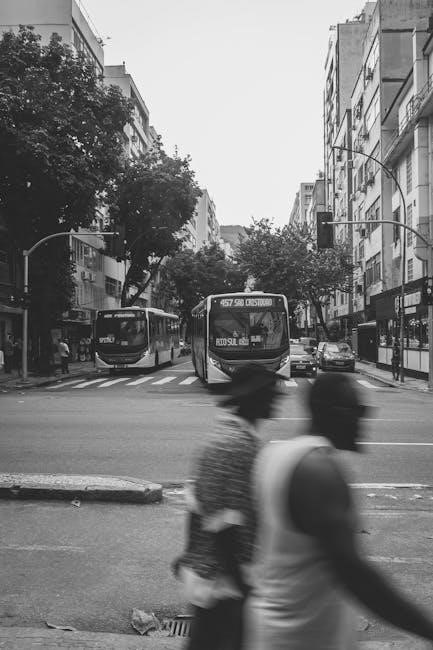
Pedestrians utilizing guide dogs or white canes must be prioritized in urban planning, demanding designs that actively mitigate risks and enhance accessibility. The presence of properly installed curb ramps and clearly defined detectable warnings is non-negotiable, providing crucial tactile cues for safe navigation.
Urban layouts should thoughtfully consider pedestrian flow and integrate traffic patterns that minimize conflicts. Obstructions on sidewalks and crosswalks, frequently cited as challenges, must be proactively addressed through diligent maintenance and enforcement.
Accessible pedestrian signals, as highlighted in ongoing legal battles, are paramount. Thoughtful design isn’t merely about compliance; it’s about fostering an inclusive environment where all pedestrians, regardless of ability, can move freely and safely.
A. Importance of Curb Ramps and Detectable Warnings
Pedestrians utilizing guide dogs or white canes must rely heavily on tactile cues, making curb ramps and detectable warnings absolutely essential components of safe pedestrian infrastructure. Curb ramps provide a smooth transition between sidewalk and street, eliminating hazardous steps for those with mobility aids.
Detectable warnings – typically textured surfaces – signal the edge of a roadway or potential hazard, alerting visually impaired pedestrians to exercise caution. These features aren’t merely conveniences; they are legally mandated safeguards.
Inadequate or poorly maintained ramps and warnings create significant risks, contributing to near misses and potential injuries. Consistent inspection and prompt repair are vital, ensuring these critical elements remain effective and reliable for all pedestrians, particularly those with visual impairments.
B. Considerations for Pedestrian Flow and Traffic Patterns
Pedestrians utilizing guide dogs or white canes must navigate environments designed with careful consideration for pedestrian flow and predictable traffic patterns. Complex intersections, like those near Union Station, pose significant challenges when traffic isn’t easily interpretable.
Urban planning should prioritize clear, direct pedestrian routes, minimizing unnecessary crossings and maximizing visibility. Synchronized pedestrian signals, offering sufficient crossing time, are crucial, especially for slower-moving individuals.
Traffic calming measures, reducing vehicle speeds, enhance safety for all pedestrians, but are particularly beneficial for those relying on mobility aids. Thoughtful design minimizes conflicts between pedestrian and vehicular traffic, fostering a more inclusive and accessible urban landscape.
XI. Proskauer’s Advocacy for Pedestrian Rights
Pedestrians utilizing guide dogs or white canes must receive unwavering legal protection, a principle Proskauer actively champions through dedicated advocacy. The firm’s commitment extends to challenging systemic barriers hindering accessibility and safety for visually impaired individuals.

Proskauer’s work encompasses litigation, such as supporting cases like that brought by the D.C. Council of the Blind, demanding accessible pedestrian signals and improved infrastructure. This advocacy aims to enforce existing laws and establish precedents ensuring equal access to public spaces.
Beyond litigation, Proskauer engages in proactive legal counsel, advising organizations and individuals on rights and strategies for navigating accessibility challenges. Their efforts contribute to a more equitable urban environment where all pedestrians, regardless of ability, can move freely and safely.
XII. Avoiding Deceptive Practices Related to Pedestrian Safety

Pedestrians utilizing guide dogs or white canes must not be subjected to environments falsely presenting themselves as accessible, a deceptive practice undermining their safety and independence. This includes misleading signage or inadequate infrastructure that creates a false sense of security.
Similar to avoiding “too-good-to-be-true” offers, vigilance is crucial regarding pedestrian safety features. Insufficiently maintained crosswalks, obstructed sidewalks, or non-functional accessible signals represent deceptive conditions endangering visually impaired individuals.
Proactive reporting of such discrepancies is vital, alongside advocating for transparent accessibility standards. Drivers must remain attentive and avoid relying solely on visual cues, recognizing that genuine accessibility requires more than superficial compliance. Protecting vulnerable pedestrians demands a commitment to authentic safety measures.