
rime of the ancient mariner pdf
Rime of the Ancient Mariner PDF: A Comprehensive Guide (Updated 03/13/2026)
Today, March 13, 2026, finding a reliable PDF of Coleridge’s poem is crucial for study. Numerous sources offer digital versions, varying in textual accuracy and formatting.
Samuel Taylor Coleridge’s “Rime of the Ancient Mariner” stands as a cornerstone of English Romantic poetry, renowned for its evocative imagery, profound themes, and masterful use of language. Originally published in 1798 as part of the Lyrical Ballads collection, the poem narrates the harrowing journey of a mariner cursed for shooting an albatross. Its exploration of sin, redemption, and humanity’s relationship with nature continues to resonate with readers today.
In the digital age, accessing this literary masterpiece has become remarkably convenient. Numerous online platforms offer the poem in PDF format, catering to students, researchers, and enthusiasts alike. However, the proliferation of digital copies also presents challenges. Variations in textual accuracy, formatting, and annotation quality exist across different PDF versions. Therefore, discerning a reliable and scholarly edition is paramount.
The availability of “Rime of the Ancient Mariner” PDFs extends beyond simple text reproductions. Many versions include critical essays, contextual information, and illustrations from various editions, enhancing the reading experience. Understanding the source and editorial choices behind each PDF is vital for informed literary analysis. This guide aims to navigate the landscape of digital availability, helping you locate a suitable PDF for your specific needs and ensuring a rewarding engagement with Coleridge’s iconic poem.
Finding a Reliable “Rime of the Ancient Mariner” PDF
Locating a trustworthy PDF of Coleridge’s poem requires careful consideration. While numerous websites offer downloads, prioritizing academic sources and established digital libraries is crucial; Project Gutenberg, for instance, provides a meticulously proofread version, ensuring textual accuracy. University websites and online literary archives often host scholarly editions with detailed annotations.
Beware of websites offering PDFs with questionable origins or excessive advertisements. These may contain errors, incomplete texts, or even malware. Always verify the source’s reputation before downloading. Look for PDFs originating from reputable publishers or institutions known for their commitment to literary preservation.
When evaluating a PDF, examine its formatting and completeness. A reliable version should accurately reproduce the poem’s original line breaks, stanza structure, and any accompanying notes or illustrations. Cross-referencing with a printed edition or a trusted online text can help identify discrepancies. Consider PDFs that offer searchable text, facilitating efficient research and analysis. Prioritize versions that clearly state their editorial basis and any alterations made to the original text.
Understanding Different PDF Versions & Sources
The “Rime of the Ancient Mariner” exists in various PDF formats, stemming from diverse sources and editorial approaches. Some PDFs are simple scans of older editions, potentially containing typographical errors or faded text. Others are digitally typeset, offering improved readability and searchability.
Different sources prioritize different aspects. Project Gutenberg focuses on providing a free, accessible text, while academic databases may offer annotated versions with critical essays. Commercial publishers often sell PDFs of their scholarly editions, featuring extensive notes and contextual information.

Understanding the source’s editorial philosophy is vital. Some PDFs adhere strictly to the original 1798 text, while others present later revised versions. Variations in punctuation, spelling, and lineation can significantly impact interpretation. Consider whether the PDF includes accompanying illustrations, such as those by Gustave Doré, which enhance the poem’s visual impact.
Furthermore, be aware of potential copyright restrictions. Public domain versions are freely available, but copyrighted editions may require purchase or subscription. Always respect intellectual property rights when accessing and using PDF versions of the poem.
Analyzing the Textual History of the Poem
“The Rime of the Ancient Mariner” underwent significant revisions throughout Coleridge’s lifetime, impacting its textual presentation in PDF formats. The initial 1798 edition, included in Lyrical Ballads, differed substantially from later versions.

Subsequent editions, particularly those of 1817 and 1834, featured alterations to language, meter, and marginal glosses. These changes reflect Coleridge’s evolving artistic vision and responses to critical feedback. PDF versions derived from different editions will therefore exhibit textual variations.
Scholars meticulously trace these changes to understand Coleridge’s intentions and the poem’s development. Examining different PDF versions allows readers to compare and contrast these textual shifts. Critical editions often present multiple versions alongside detailed textual notes.
When studying a PDF, identify the edition it represents. The preface or introductory material should specify the source text. Recognizing the textual history is crucial for accurate interpretation and appreciating the poem’s complex evolution. Understanding these nuances enhances the reading experience and scholarly analysis.
Coleridge’s “Rime” and its Literary Context
“The Rime of the Ancient Mariner” emerged during the burgeoning Romantic period, profoundly influenced by contemporary literary trends. Coleridge, alongside Wordsworth, sought to break from Neoclassical conventions, prioritizing imagination, emotion, and the sublime.
The poem’s Gothic elements – supernatural occurrences, isolation, and psychological torment – reflect the era’s fascination with the mysterious and irrational. PDF versions allow convenient access to this landmark work, facilitating study within its historical framework.
Furthermore, the poem engages with philosophical debates surrounding sin, redemption, and humanity’s relationship with nature. Its exploration of these themes resonates with Romantic ideals. Accessing a digital PDF enables easy comparison with other Romantic texts.
Understanding the literary context enriches the reading experience. Examining the poem alongside works by Wordsworth, Byron, and Shelley reveals shared concerns and stylistic approaches. A well-annotated PDF can provide valuable contextual information, enhancing comprehension and critical analysis of Coleridge’s masterpiece.
The Poem’s Themes: Sin, Redemption, and Nature

“The Rime of the Ancient Mariner” powerfully explores universal themes of sin, redemption, and humanity’s interconnectedness with nature. The Mariner’s impulsive act of shooting the albatross initiates a chain of suffering, symbolizing a disruption of natural harmony and a transgression against divine order.
His subsequent journey becomes a harrowing path towards atonement, marked by isolation, guilt, and supernatural encounters. A readily available PDF allows for close textual analysis of these thematic developments, tracing the Mariner’s psychological and spiritual transformation.
The poem emphasizes the sanctity of all living creatures and the consequences of disrespecting the natural world. Coleridge’s vivid imagery underscores the beauty and power of nature, contrasted with the desolation brought about by sin. Digital PDFs facilitate easy annotation and highlighting of key passages related to these themes.
Ultimately, the Mariner achieves redemption through acknowledging his sin and embracing a renewed reverence for life. Studying the poem via PDF allows for focused examination of this complex interplay of moral and spiritual forces.
Symbolism in “The Rime of the Ancient Mariner”
“The Rime of the Ancient Mariner” is richly layered with symbolism, demanding careful interpretation. A digital PDF version of the poem becomes an invaluable tool for dissecting these complex layers, enabling detailed annotation and cross-referencing.
The albatross, perhaps the most prominent symbol, represents nature, innocence, and divine grace. Its senseless killing signifies a violation of the natural order and a rejection of spiritual connection. The ship itself symbolizes humanity’s journey through life, fraught with peril and uncertainty.
The spectral figures of Death and Life-in-Death embody the consequences of sin and the struggle between mortality and eternal punishment. Access to a searchable PDF allows for quick identification of instances where these figures appear and their symbolic weight.
Furthermore, the sea represents the vastness and power of the natural world, while the sun and moon symbolize hope and despair, respectively. A well-formatted PDF enhances the reader’s ability to trace these recurring symbols and their evolving meanings throughout the narrative.
The Mariner’s Journey: A Detailed Plot Summary
“The Rime of the Ancient Mariner” recounts a harrowing tale of a sailor’s transgression and its supernatural consequences. A readily available PDF version facilitates close reading and detailed plot analysis, crucial for understanding the poem’s intricate structure.
The poem begins with the Mariner halting a wedding guest, compelled to share his story. He narrates a voyage south, where an albatross appears, initially bringing good fortune. However, the Mariner impulsively shoots the bird, triggering a series of calamitous events.

The ship is plagued by storms, drought, and the haunting presence of Death and Life-in-Death. The crew perishes, leaving the Mariner alone, cursed to wander the seas. He eventually finds redemption through appreciating the beauty of nature and blessing the water snakes.
The Mariner returns home, burdened by his tale and compelled to share it with others as penance. A digital PDF allows for easy navigation through the poem’s seven parts, enabling a comprehensive grasp of the narrative’s progression and thematic development.
Critical Interpretations of the Poem
Accessing a reliable “Rime of the Ancient Mariner” PDF unlocks a wealth of critical analysis. Scholars have long debated the poem’s meaning, offering diverse interpretations centered on themes of sin, redemption, and humanity’s relationship with nature.
Some critics view the poem as an allegory for the dangers of disrupting the natural order, highlighting the Mariner’s act of shooting the albatross as a symbol of disrespect for creation. Others focus on the psychological torment of the Mariner, interpreting his journey as an exploration of guilt, isolation, and the search for forgiveness.
Romantic interpretations emphasize the poem’s celebration of imagination and the sublime, while ecological readings connect it to contemporary concerns about environmental responsibility. A digital PDF facilitates comparative analysis of these varied perspectives.
Furthermore, the poem’s complex symbolism – the albatross, the sea, the spectral figures – invites ongoing debate. Having the text readily available in PDF format allows researchers to easily reference specific passages and support their arguments with textual evidence, fostering deeper understanding.
Exploring the Poem’s Meter and Rhyme Scheme
A readily accessible “Rime of the Ancient Mariner” PDF is invaluable for detailed analysis of its intricate poetic structure. Coleridge employs a variety of meters and rhyme schemes, shifting throughout the poem to mirror the Mariner’s changing emotional state and the narrative’s evolving intensity.
Initially, the poem utilizes a relatively straightforward four-line stanza with an ABCB rhyme scheme, creating a ballad-like quality. However, as the Mariner’s journey progresses, the meter becomes more irregular and the rhyme schemes more complex, reflecting his growing isolation and psychological distress.
The PDF format allows for close reading and annotation, enabling students and researchers to meticulously track these shifts in poetic form. Identifying patterns in the meter and rhyme can reveal subtle nuances in meaning and contribute to a deeper appreciation of Coleridge’s craftsmanship.
Furthermore, the poem’s use of internal rhyme and alliteration adds to its musicality and enhances its dramatic effect. A digital copy facilitates easy searching for specific instances of these poetic devices, aiding in a comprehensive understanding of the poem’s artistry.
The Role of Supernatural Elements in the Narrative
Access to a quality “Rime of the Ancient Mariner” PDF is essential for dissecting the poem’s pervasive supernatural elements. Coleridge masterfully weaves a world where the natural and the preternatural collide, blurring the lines between reality and imagination. The albatross, a symbol of grace, becomes a focal point for supernatural intervention and consequence.
The spectral figures of Death and Life-in-Death, personified as skeletal figures gambling for the Mariner’s soul, represent a chilling intrusion of the otherworldly into the natural realm. The cursed ship, sailing into a desolate landscape, embodies a haunting, supernatural presence.
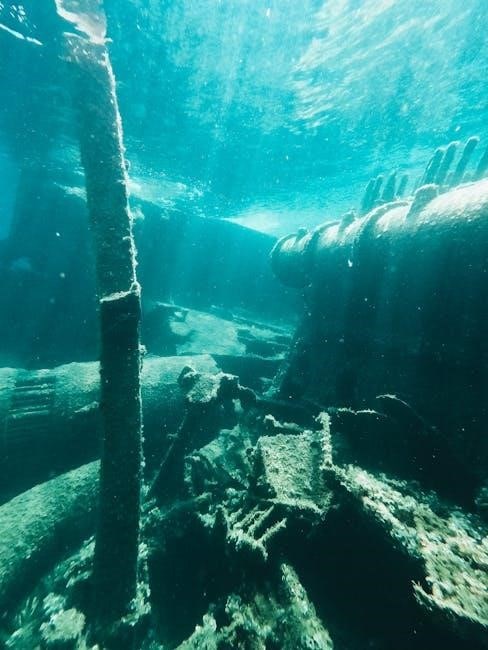
A digital PDF allows for easy referencing and annotation of these supernatural occurrences, facilitating a detailed examination of their symbolic significance. The poem’s exploration of guilt, punishment, and redemption is inextricably linked to these supernatural forces.
Analyzing the text within a PDF format enables readers to trace how Coleridge utilizes supernatural imagery to explore themes of sin, suffering, and the interconnectedness of all living things. The poem’s enduring power lies in its ability to evoke a sense of wonder and terror through its masterful deployment of the supernatural.
“Rime of the Ancient Mariner” and Romanticism
A readily available “Rime of the Ancient Mariner” PDF is invaluable for understanding the poem’s central role within the Romantic movement; Published in 1798, the poem embodies key tenets of Romanticism, including a celebration of nature, an emphasis on emotion and imagination, and a fascination with the supernatural and the exotic.
The poem’s focus on the individual’s experience – the Mariner’s isolation and suffering – aligns with the Romantic emphasis on subjective experience. Coleridge’s vivid descriptions of the natural world, both beautiful and terrifying, reflect the Romantic reverence for nature’s power and sublimity.
Accessing the text through a digital PDF allows for close reading and annotation, highlighting the poem’s stylistic features characteristic of Romanticism, such as its use of evocative imagery and heightened language. The poem’s exploration of themes like guilt, redemption, and the interconnectedness of all living things resonates with Romantic ideals.
Studying the poem via PDF facilitates a deeper appreciation of its contribution to the Romantic literary landscape, showcasing its influence on subsequent generations of poets and artists. It’s a cornerstone example of the movement’s aesthetic and philosophical principles.
The Poem’s Influence on Later Literature and Art
A digital “Rime of the Ancient Mariner” PDF unlocks a deeper understanding of the poem’s enduring legacy, revealing its profound impact on subsequent literature and artistic expression. Its themes of isolation, guilt, and the consequences of disrupting the natural order have resonated with artists for centuries.
The poem’s symbolic imagery – the albatross, the spectral ship, the desolate sea – has been repeatedly referenced and reinterpreted in various art forms. Artists like Gustave Doré created iconic illustrations inspired by Coleridge’s verses, further cementing the poem’s visual impact.
Literary works across genres demonstrate the poem’s influence, from Melville’s Moby Dick, which echoes the Mariner’s obsessive quest, to more contemporary novels exploring themes of environmental responsibility and human alienation. Having a readily accessible PDF allows for comparative analysis.
The poem’s exploration of the supernatural also paved the way for later Gothic and horror literature. Studying the text in PDF format facilitates tracing these connections, revealing how Coleridge’s masterpiece continues to inspire and challenge artists today, solidifying its place in the canon.
Rime Input Method and its Connection to Text Analysis
The availability of a digital “Rime of the Ancient Mariner” PDF is significantly enhanced when paired with a robust text input method like Rime. Rime, a highly customizable input method, allows for efficient and accurate text entry, crucial for detailed literary analysis.
Researchers and students can leverage Rime’s features to quickly input lengthy passages from the PDF for close reading and annotation. Its flexibility extends to configuring custom dictionaries tailored to literary terms and the poem’s specific vocabulary, streamlining the analytical process.
Rime’s dictionary configuration capabilities are particularly valuable when dealing with archaic language and unique spellings found in Coleridge’s work. The ability to create user-defined dictionaries ensures accurate input and reduces errors during transcription.

Furthermore, Rime’s cross-platform synchronization allows seamless continuation of work across multiple devices, facilitating collaborative research and study. Efficient text input, powered by Rime, frees up cognitive resources for deeper engagement with the poem’s complexities, maximizing the benefits of the PDF resource.
Customizing Rime Input Method for Literary Study
To maximize the utility of a “Rime of the Ancient Mariner” PDF, customizing Rime input method is essential. Begin by selecting a suitable input scheme – options range from simple to highly complex, catering to individual preferences. The key lies in tailoring the configuration to the specific demands of literary analysis.
Creating a custom dictionary focused on the poem’s vocabulary is paramount. Include archaic terms, nautical language, and Coleridge’s unique phrasing. This minimizes typing errors and accelerates the input of textual evidence. Rime’s .dict.yaml format allows for easy addition and modification of entries.
Consider implementing synonym matching to facilitate nuanced textual comparisons. Rime’s advanced features enable the automatic suggestion of related terms, aiding in the identification of thematic connections within the poem.

For researchers, configuring Rime for efficient handling of footnotes and citations is invaluable. Custom keybindings can streamline the insertion of bibliographic information, saving time and ensuring consistency. Ultimately, a customized Rime setup transforms the PDF from a static document into a dynamic analytical tool.
Using Rime for Efficient Text Input of the Poem
When working with a “Rime of the Ancient Mariner” PDF, Rime input method significantly enhances text input efficiency. Its customizable nature allows for the creation of shortcuts tailored to the poem’s unique language and structure. Frequent phrases or lines can be assigned to custom key combinations, drastically reducing typing time.
Leverage Rime’s predictive text capabilities, especially after building a dedicated dictionary. As you type, Rime will suggest relevant words and phrases from the poem, minimizing errors and accelerating the process of quoting or paraphrasing. This is particularly useful for complex or archaic vocabulary.
Rime’s ability to handle multiple input schemes is beneficial. You can switch seamlessly between a general-purpose scheme and a specialized one optimized for the poem, depending on the task at hand. This flexibility streamlines both broad analysis and focused textual work.
Furthermore, Rime’s cross-platform synchronization ensures a consistent input experience across devices, allowing you to continue your analysis uninterrupted, regardless of your location or operating system.
Rime’s Dictionary Configuration for Literary Terms
When analyzing a “Rime of the Ancient Mariner” PDF, Rime’s dictionary configuration becomes paramount. Expand the default dictionary with specialized literary terms – “allegory,” “metaphor,” “personification,” “Romanticism,” and Coleridge-specific vocabulary like “albatross” and “spectral.” This ensures accurate and efficient input during critical analysis.
Utilize Rime’s .dict.yaml format to create custom entries. Define pronunciations and prioritize frequently used terms for faster recall. Consider including variations in spelling or phrasing to accommodate different critical interpretations of the poem.
Import existing literary glossaries or create your own, tailored to the specific nuances of Coleridge’s work. This curated dictionary will significantly reduce typing effort and minimize errors when documenting observations about symbolism, themes, and poetic devices.
Regularly update the dictionary as your understanding of the poem deepens. Add new terms encountered in scholarly articles or critical essays, creating a dynamic resource that evolves alongside your research. This proactive approach maximizes Rime’s utility for in-depth literary study.
Cross-Platform Synchronization of Rime Configurations
For researchers studying a “Rime of the Ancient Mariner” PDF across multiple devices, seamless Rime configuration synchronization is essential. Maintaining a consistent dictionary – enriched with literary terms – and custom keybindings ensures a fluid workflow regardless of operating system.
Utilize cloud storage services like Dropbox, Google Drive, or OneDrive as a central repository for your Rime configuration folder. This allows automatic synchronization between your Mac and Windows machines, ensuring your specialized settings are always available.
Configure Rime to monitor the designated cloud folder for changes. Any modifications made on one device will be automatically reflected on others, eliminating the need for manual transfers. This is particularly useful when annotating a PDF and refining your analysis across different platforms.
Regularly back up your Rime configuration folder to prevent data loss. Consider version control systems like Git for more advanced management and the ability to revert to previous configurations if needed. Consistent synchronization streamlines your literary research process.
Advanced Rime Features for Researchers and Students
When deeply analyzing a “Rime of the Ancient Mariner” PDF, Rime’s advanced features significantly enhance research efficiency. Leverage its powerful dictionary configuration to pre-load literary terms, critical interpretations, and character names, accelerating text input during note-taking and essay writing.
Explore Rime’s synonym matching capabilities to quickly access alternative phrasing and enrich your analytical vocabulary. This is particularly useful when dissecting Coleridge’s complex language and symbolism. Customize keybindings for frequently used annotations or research commands.
Rime’s automatic phrase construction feature can learn from your input, suggesting longer phrases based on your writing style. This speeds up the process of entering recurring arguments or quotes from the poem. Utilize custom filters to prioritize specific words or phrases relevant to your research.
For advanced users, scripting allows automating complex tasks, such as generating concordances or analyzing the poem’s meter. Mastering these features transforms Rime into a powerful tool for literary scholarship.