
how great thou art pdf sheet music
How Great Thou Art PDF Sheet Music: A Comprehensive Guide
How Great Thou Art sheet music in PDF format is widely available, offering various arrangements for vocalists and instrumentalists, reflecting its enduring global popularity.
Understanding the Hymn’s Origins
How Great Thou Art’s roots trace back to a Swedish poem, “O Store Gud” (“O Great God”), penned in 1885 by Carl Boberg after a powerful religious experience. Inspired by a communion service and a subsequent thunderstorm, Boberg’s lyrics initially focused on nature’s grandeur reflecting God’s power.
The poem was set to music, and eventually translated into German and Russian before Stuart K. Hine encountered it during his missionary work in the UK in the 1940s. Hine translated the hymn into English, adding verses and refining the lyrics, resulting in the version we know today. The song gained significant traction after being popularized by George Beverly Shea during Billy Graham’s crusades in the 1950s, becoming a beloved staple in Christian worship worldwide. The PDF sheet music reflects this rich history.
Stuart K. Hine: The Composer and Lyricist
Stuart K. Hine (1916-1985) was a British evangelist, singer, and songwriter, crucially responsible for adapting and popularizing “How Great Thou Art” for an international audience. While not the original composer – that honor belongs to Carl Boberg – Hine’s English translation and lyrical additions were pivotal to the hymn’s widespread success.
Hine encountered the song during his missionary travels and recognized its potential. He added verses focusing on Christ’s sacrifice and eventual return, enhancing the hymn’s theological depth. His work ensured the song resonated with a broader Christian demographic. The readily available PDF sheet music today is a testament to Hine’s enduring legacy, allowing continued performance and appreciation of his contribution to gospel music.
The Historical Context of “How Great Thou Art”
The hymn’s origins trace back to 1893 Sweden, with Carl Boberg’s poem “O Store Gud” (“O Great God”). Inspired by a powerful sunset and a thunderstorm, Boberg initially penned it as a poem, later setting it to music. The song gradually spread through Scandinavia, undergoing translations into German and Russian before reaching Britain.
Stuart K. Hine’s 1949 English adaptation, with added verses, proved transformative. Post-World War II, the hymn’s message of hope and divine majesty deeply resonated with audiences. The availability of sheet music, now commonly found in PDF format, facilitated its global dissemination. Its enduring appeal is reflected in the continued demand for accessible arrangements, ensuring its place in hymnals and worship services worldwide.
Finding Reliable PDF Sheet Music Sources
Numerous online platforms offer How Great Thou Art sheet music in PDF format, ranging from official publishers to free archives and paid subscription services.
Official Music Publishers and Websites
When seeking authentic How Great Thou Art PDF sheet music, prioritizing official sources ensures accuracy and legal compliance. Integrity Music UK administers rights for the rest of the world, while the Stuart Hine Trust manages print rights in the USA.
These organizations, or their authorized distributors, typically offer high-quality, professionally arranged sheet music for various vocal ranges and instrumental ensembles. Purchasing directly supports the copyright holders and guarantees a reliable transcription. Websites associated with these publishers often provide previews, allowing you to assess the arrangement before committing to a purchase.
Be cautious of unofficial sources, as they may contain errors or infringe upon copyright laws. Always verify the legitimacy of the provider before downloading or using any sheet music.
Free Sheet Music Archives: Considerations
While numerous websites offer free How Great Thou Art PDF sheet music, exercising caution is crucial. These archives often lack quality control, potentially presenting inaccurate transcriptions or incomplete arrangements. Copyright status is also a significant concern; ensure the distribution aligns with legal permissions from Integrity Music UK and the Stuart Hine Trust.
Many free versions may be user-submitted, lacking professional editing. Assess the source’s reputation and user reviews before downloading. Be wary of sites with excessive advertisements or suspicious download links.
Consider these resources as supplementary, always cross-referencing with official arrangements when possible to ensure musical integrity and respect copyright regulations.
Paid Sheet Music Platforms: Benefits and Costs
Purchasing How Great Thou Art sheet music from established platforms like Musicnotes.com or Sheet Music Plus offers several advantages. These sites typically provide high-quality, professionally arranged PDFs, often with multiple key options and vocal arrangements (Soprano, Alto, Tenor, Bass). Accuracy and readability are significantly improved compared to free sources.
Costs vary depending on the arrangement – a simple piano accompaniment might range from $5 to $10, while more complex orchestral scores could exceed $20.
However, the investment ensures legally obtained, reliable sheet music, supporting composers and publishers while providing a superior learning experience.
Different Arrangements and Vocal Ranges
How Great Thou Art exists in diverse arrangements—solo soprano, full choir, piano, guitar, and instrumental versions—catering to varied skill levels and preferences.
Soprano, Alto, Tenor, and Bass Arrangements
How Great Thou Art sheet music frequently provides separate vocal arrangements tailored for Soprano, Alto, Tenor, and Bass voices, enabling harmonious four-part vocal performances. These arrangements adjust the melody and harmonies to suit each vocal range comfortably.
Soprano parts typically feature the main melody, often reaching higher notes, while Alto harmonies provide a rich, supporting texture. Tenor arrangements offer a mid-range melodic line, and Bass parts deliver a foundational harmonic grounding. Finding PDF versions specifically labeled for each voice part is common, facilitating choir rehearsals and individual practice.
Some arrangements combine parts, while others offer fully separated scores for each vocal range, allowing for greater flexibility in ensemble settings. The availability of these distinct arrangements contributes to the hymn’s widespread performance across diverse vocal groups.
Piano Accompaniment Variations
How Great Thou Art PDF sheet music showcases diverse piano accompaniment variations, ranging from simple chord charts suitable for beginner pianists to elaborate arrangements for advanced players. Many versions include a foundational accompaniment pattern, supporting the vocal melody with harmonic richness.
More complex arrangements feature intricate introductions, interludes, and postludes, adding depth and artistry to the hymn. Some piano scores incorporate stylistic elements like arpeggios, broken chords, and dynamic variations to enhance the emotional impact.
You can find simplified piano arrangements focusing on basic chords and melodies, alongside fully orchestrated versions that emulate a fuller instrumental ensemble. These variations cater to different skill levels and performance contexts, ensuring accessibility for all pianists.
Guitar and Instrumental Arrangements
How Great Thou Art PDF sheet music extends beyond vocal and piano arrangements, offering a wealth of options for guitarists and other instrumentalists. Guitar tabs and chord charts are readily available, catering to both fingerstyle and strumming techniques.
Instrumental arrangements often feature simplified melodies suitable for solo performances or ensemble settings. These can include adaptations for instruments like violin, flute, or trumpet, allowing for diverse interpretations of the hymn. Acoustic picking band builds are also present in some arrangements;
Many PDF sources provide arrangements that combine guitar with other instruments, creating richer textures and harmonies. These arrangements often include detailed notation and chord voicings, enabling musicians to create beautiful and moving renditions.
Key Elements of the Sheet Music
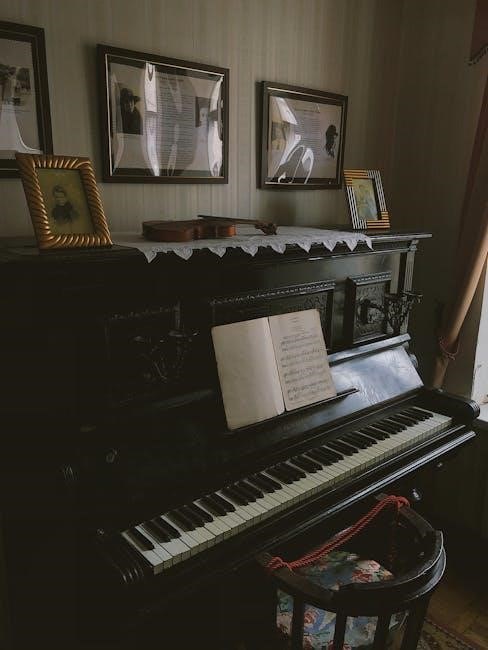
How Great Thou Art sheet music commonly displays standard musical notation, chord progressions, key signatures, tempo, and dynamic markings for accurate performance.
Understanding the Musical Notation
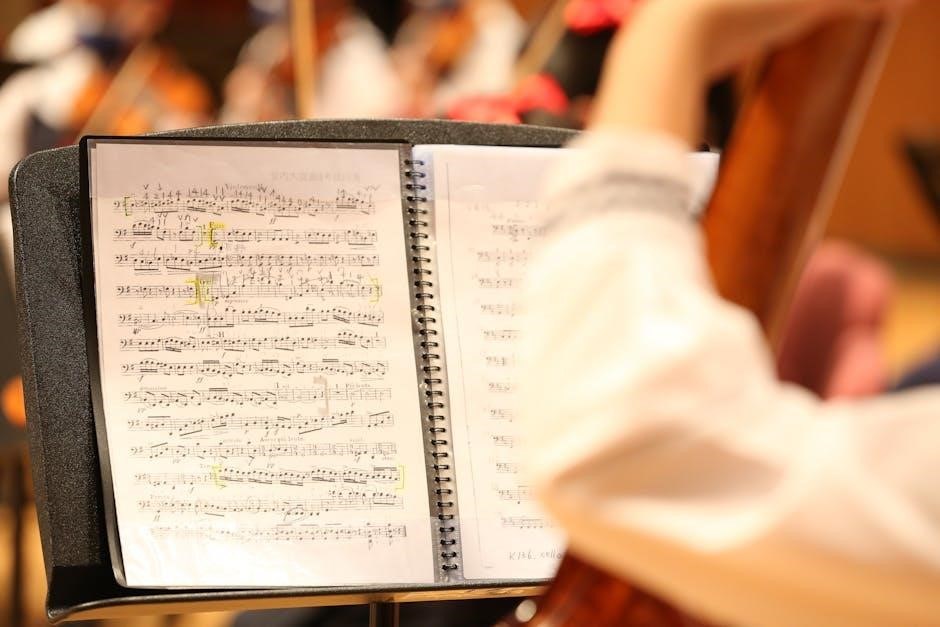
The How Great Thou Art sheet music utilizes standard musical notation, essential for musicians to interpret and perform the hymn accurately. Familiarity with the staff, clef signs (typically treble for melody and bass for accompaniment), and note values – whole, half, quarter, and eighth notes – is crucial.
Pay close attention to time signatures, indicating the number of beats per measure, and bar lines that divide the music into manageable sections; Rests represent silence, and their duration corresponds to note values. Accidentals – sharps, flats, and naturals – alter the pitch of notes. Understanding these symbols unlocks the musical language of this beloved hymn, allowing for a faithful and expressive rendition. The provided examples often include lyrics aligned with the corresponding notes, aiding in vocal performance.
Chord Progressions and Key Signatures
How Great Thou Art commonly appears in the key of G major, though arrangements in other keys like C major or D major are also prevalent in PDF sheet music. The key signature indicates sharps or flats present throughout the piece, simplifying note reading.
The hymn features a relatively straightforward chord progression, often revolving around primary chords – G, C, and D – creating a harmonious and uplifting feel. Variations may introduce secondary dominants or minor chords for added color. Analyzing the chord changes helps understand the harmonic structure and facilitates accompaniment on instruments like piano or guitar. Recognizing these patterns enhances musical interpretation and allows for improvisation within the framework of the hymn’s established harmony.
Tempo and Dynamics Markings
PDF sheet music for How Great Thou Art typically indicates a moderate tempo, often around 60-72 beats per minute, denoted as Moderato or Andante. This pacing allows for reverent expression and clear enunciation of the lyrics. Dynamics markings, such as *p* (piano – soft) and *f* (forte – loud), guide the performer in shaping the emotional intensity of the hymn.

Gradual dynamic changes, indicated by crescendo (gradually louder) and diminuendo (gradually softer), add depth and nuance. Observing these markings is crucial for conveying the hymn’s message of awe and worship. Performers should interpret these cues to build towards climactic moments and create a moving and impactful rendition, enhancing the overall musical experience.

Using the PDF Sheet Music Effectively
Digital readers and apps facilitate practice; printing offers a traditional approach. Careful study of the PDF enhances learning and performance of this beloved hymn.
Printing and Formatting Tips
Ensuring optimal print quality is crucial for readability when using How Great Thou Art PDF sheet music. Select “Fit to Page” in your print settings to avoid cropping musical notation, especially chord symbols and lyrics.
Consider using a higher quality paper stock for durability, particularly if you anticipate frequent use.
For multi-page arrangements, printing double-sided can conserve paper, but verify that the page order remains correct for seamless performance;
If the PDF contains grayscale images, adjust your printer settings to enhance contrast for clearer visibility.
Experiment with different font sizes within the PDF viewer before printing to find a comfortable reading experience.
Finally, a test print of a single page is always recommended to confirm formatting before committing to a full print run.
Digital Sheet Music Readers and Apps
Numerous digital sheet music readers and apps enhance the experience of using How Great Thou Art PDF sheet music. Apps like ForScore, MusicReader, and Sheet Music Pro allow for annotation, setlist creation, and page turning via foot pedal or hands-free modes.
These platforms often support importing PDFs, organizing music libraries, and even offer features like metronome integration and audio playback.
Cloud synchronization ensures access across multiple devices, ideal for musicians on the go.
Some apps offer automatic page turning based on tempo, simplifying performance.
Utilizing these tools can reduce paper clutter and provide a more interactive and convenient way to practice and perform this beloved hymn.
Practicing and Learning the Hymn
Effectively practicing How Great Thou Art with its PDF sheet music requires a focused approach. Begin by slowly working through each section, paying close attention to tempo and dynamics. Utilize a metronome to maintain consistent rhythm, and practice challenging passages repeatedly.
Focus on accurate pitch and phrasing, listening to recordings for guidance.
Break down the hymn into smaller, manageable parts, mastering each before combining them.
Consider practicing with an accompaniment track to develop ensemble skills;
Regular, consistent practice, even in short bursts, will yield the best results, allowing you to convey the hymn’s powerful message with sincerity.

Copyright and Usage Rights
Integrity Music UK and the Stuart Hine Trust administer rights for How Great Thou Art; permissions are needed for performance and distribution.
Integrity Music UK and Stuart Hine Trust
Understanding the copyright landscape surrounding “How Great Thou Art” is crucial for legal and ethical usage of its sheet music. Rest of the world rights are primarily administered by Integrity Music UK, a prominent name in Christian music publishing. They oversee licensing and permissions for various applications of the hymn.
The original composition’s rights are also closely tied to the Stuart Hine Trust, representing the legacy of the composer and lyricist, Stuart K. Hine. This trust ensures that the integrity of his work is maintained and that appropriate royalties are distributed.
Any use beyond personal practice – including public performance, arrangement, or distribution of the PDF sheet music – generally requires obtaining the necessary licenses from these entities. Respecting these copyright stipulations supports both the ongoing ministry of the song and the rights of its creators.
Public Domain Status and Licensing
Determining the public domain status of “How Great Thou Art” is complex. While the hymn’s popularity is immense, it isn’t fully within the public domain globally due to ongoing copyright protections. The lyrics and music, originally copyrighted in 1949 and later, remain under protection in many regions.
Licensing is therefore often required for uses beyond individual practice. This includes performances, creating derivative arrangements, or distributing the PDF sheet music. Integrity Music UK and the Stuart Hine Trust manage these licenses.
Different territories may have varying copyright durations. Always verify the specific regulations in your location before assuming public domain status. Utilizing licensed sheet music ensures compliance and supports the creators’ rights.
Permissions for Performance and Distribution
Performing “How Great Thou Art” publicly, such as in a concert or church service, generally requires a license from Integrity Music UK, the rights administrator. Distribution of the PDF sheet music, even without profit, also necessitates permission. This includes sharing digitally or creating physical copies.
Obtaining these permissions often involves contacting Integrity Music UK directly or utilizing licensing agencies like CCLI (Christian Copyright Licensing International). They offer blanket licenses covering a wide range of copyrighted music.
Failure to secure proper permissions can lead to copyright infringement. Respecting copyright laws ensures continued access to this beloved hymn and supports the work of its creators and publishers.